Sodiceram: The Sodium-Enhanced Ceramic Materials, Applications, Benefits, and Future Innovations
Ceramic materials have been used for thousands of years, from simple pottery to advanced engineering components. Today, modern science has transformed ceramics into highly specialized materials capable of performing in some of the world’s most demanding environments. One of the newest developments in this field is sodiceram.
Sodiceram refers to sodium-enhanced ceramic materials engineered to deliver higher strength, lower porosity, better durability, and improved resistance to heat, chemicals, and wear. Unlike conventional ceramics, sodiceram is designed using carefully controlled sodium compounds during manufacturing, creating a denser internal structure that improves overall performance.
Although the term “sodiceram” is still emerging in technical discussions, the concept behind it represents an important direction in modern materials science. Industries including healthcare, electronics, aerospace, automotive manufacturing, construction, and renewable energy are constantly searching for ceramic materials that are lighter, stronger, and longer-lasting. Sodiceram meets many of these demands.
This comprehensive guide explains everything you need to know about sodiceram, including how it is made, why it performs better than many traditional ceramics, where it is used, and why experts believe sodium-enhanced ceramics will become increasingly important in future technologies.
What Is Sodiceram?
Sodiceram is a category of advanced ceramic materials enhanced with carefully controlled sodium-based compounds during production. The addition of sodium helps modify the ceramic microstructure, producing materials with:
- Greater density
- Reduced porosity
- Higher mechanical strength
- Better resistance to thermal shock
- Improved chemical stability
- Longer service life
Unlike ordinary ceramics that may contain microscopic air pockets, sodiceram is engineered to minimize internal voids. This creates a stronger and more reliable material capable of performing under extreme conditions.
Rather than representing a single product, sodiceram describes a family of sodium-enhanced ceramic materials developed for industrial and technological applications.
Modern research continues expanding the possibilities of sodiceram by combining sodium compounds with advanced ceramic ingredients such as:
- Alumina
- Zirconia
- Silica
- Silicon carbide
- Mullite
- Specialty oxide ceramics
Each combination produces different characteristics suitable for specific industries.
Understanding the Science Behind Sodiceram
The impressive performance of sodiceram comes from improvements made at the microscopic level.
Every ceramic contains tiny particles called grains. During manufacturing, these grains fuse together under high temperatures.
When sodium compounds are introduced in carefully controlled amounts, several important changes occur:
- Particle bonding becomes stronger.
- Grain boundaries become more stable.
- Internal pores decrease significantly.
- Material density increases.
- Structural defects become less common.
The result is a ceramic that is more uniform throughout its structure.
A denser ceramic naturally becomes:
- Harder
- Tougher
- Less likely to crack
- More resistant to moisture
- More resistant to chemicals
These improvements explain why sodiceram attracts attention across multiple industries.
Also Read: Caleb James Goddard: The Untold Story of Jack Nicholson and Susan Anspach’s Son
How Sodiceram Is Manufactured
Producing sodiceram requires precision throughout every manufacturing stage.
Although formulas vary depending on the intended application, the overall production process follows several key steps.
Raw Material Selection
Manufacturers begin by choosing high-quality ceramic powders.
Common materials include:
- Alumina
- Silica
- Zirconia
- Clay minerals
- Silicon carbide
- Aluminum oxide
The purity of these materials greatly influences the final product.
Addition of Sodium Compounds
Carefully measured sodium-based additives are introduced into the ceramic mixture.
These additives may include:
- Sodium silicates
- Sodium carbonate
- Specialized sodium oxides
- Proprietary sodium-based ceramic modifiers
The exact amount depends on the desired performance characteristics.
Mixing
Advanced equipment blends the ceramic powders until every particle is evenly distributed.
Uniform mixing helps create consistent strength throughout the finished product.
Shaping
Manufacturers then shape the material using methods such as:
- Dry pressing
- Isostatic pressing
- Injection molding
- Extrusion
- Slip casting
Each technique serves different industrial purposes.
Drying
Moisture is slowly removed from the shaped ceramic before firing.
Proper drying prevents cracking during heating.
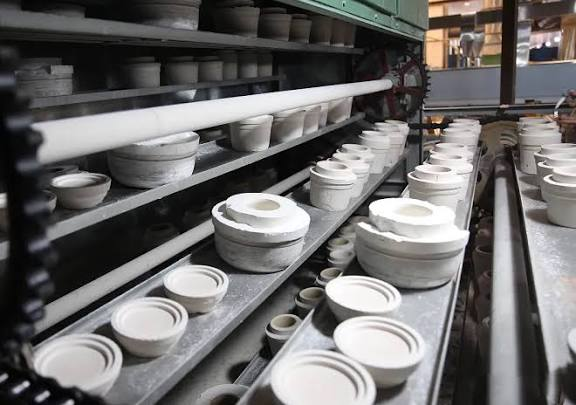
High-Temperature Sintering
The ceramic enters specialized kilns where temperatures often exceed 1,200°C.
During this stage:
- Ceramic particles bond together.
- Sodium compounds promote improved densification.
- Internal pores shrink.
- Strength increases dramatically.
The sintering stage largely determines the final quality of sodiceram.
Finishing
After cooling, manufacturers perform finishing operations including:
- Grinding
- Polishing
- Surface coating
- Precision machining
- Quality inspection
The finished material is then ready for industrial use.
Key Characteristics of Sodiceram
Sodiceram stands out because of several advanced material properties.
High Density
The sodium-enhanced manufacturing process creates a compact internal structure.
Higher density leads to:
- Better strength
- Reduced water absorption
- Improved durability
Low Porosity
Traditional ceramics often contain microscopic pores.
Sodiceram significantly reduces these pores, making the material:
- More waterproof
- More hygienic
- Less vulnerable to chemical attack
Excellent Mechanical Strength
Dense particle bonding allows sodiceram to tolerate higher loads without breaking.
This makes it useful for structural and industrial components.
Outstanding Heat Resistance
Many sodium-enhanced ceramics maintain their integrity at extremely high temperatures.
They resist:
- Thermal expansion
- Heat deformation
- Rapid temperature changes
Chemical Stability
Sodiceram performs well when exposed to:
- Acids
- Alkalis
- Solvents
- Industrial chemicals
This characteristic increases its lifespan in harsh environments.
Electrical Insulation
Many sodiceram formulations naturally resist electrical conductivity.
This property is valuable in:
- Electronics
- Power systems
- Semiconductor manufacturing
Long Service Life
The combination of strength and chemical resistance reduces maintenance costs and replacement frequency.
Major Benefits of Sodiceram
The growing popularity of sodiceram comes from its wide range of advantages.
Superior Durability
Sodiceram lasts longer than many conventional ceramic materials.
Its dense structure slows wear and minimizes damage caused by repeated stress.
Reduced Maintenance Costs
Because the material resists cracking and corrosion, equipment owners spend less on repairs.
Industries benefit from:
- Lower downtime
- Longer maintenance intervals
- Reduced replacement costs
Better Moisture Resistance
Water penetration can weaken ordinary ceramics over time.
Sodiceram’s low porosity helps prevent moisture-related damage.
Improved Reliability
Manufacturers appreciate consistent performance.
Sodiceram offers predictable behavior under:
- High pressure
- Heavy loads
- Extreme temperatures
- Chemically aggressive environments
Enhanced Safety
Stronger ceramic components reduce the likelihood of unexpected failures.
This is especially important in industries where equipment reliability directly affects worker safety.
Excellent Dimensional Stability
Sodiceram maintains its shape even after repeated heating and cooling cycles.
This stability improves manufacturing precision.
Different Types of Sodiceram Materials
The exact composition varies depending on the intended application.
Several categories have emerged within sodium-enhanced ceramic technology.
Structural Sodiceram
Designed for heavy-duty industrial equipment.
Common uses include:
- Machine components
- Industrial rollers
- Protective linings
Technical Sodiceram
Used where precision and reliability are essential.
Applications include:
- Electronic substrates
- Sensors
- Laboratory equipment
Bio-Compatible Sodiceram
Certain sodium-enhanced ceramics are being researched for medical use.
Potential applications include:
- Dental restorations
- Bone replacement materials
- Surgical implants
High-Temperature Sodiceram
Engineered for furnaces and industrial heating systems.
These materials remain stable under prolonged heat exposure.
Chemical-Resistant Sodiceram
Designed for aggressive chemical environments.
Frequently used in:
- Chemical processing plants
- Pharmaceutical production
- Water treatment facilities
Industrial Applications of Sodiceram
One reason sodiceram has gained attention is its versatility.
Many industries benefit from its advanced properties.
Manufacturing Equipment
Factories use sodiceram components where metal parts would quickly wear out.
Examples include:
- Wear plates
- Cutting surfaces
- Industrial bearings
- Conveyor components
Mining Industry
Mining operations expose materials to:
- Abrasion
- Heavy impact
- Dust
- Moisture
Sodiceram components can survive these demanding conditions longer than many traditional materials.
Automotive Industry
Vehicle manufacturers increasingly seek lightweight yet durable materials.
Potential sodiceram applications include:
- Engine insulation
- Brake system components
- High-temperature sensors
- Exhaust system parts
Aerospace Engineering
Aircraft and spacecraft require materials capable of withstanding:
- Rapid temperature changes
- Mechanical stress
- Corrosion
Advanced ceramic technologies similar to sodiceram are becoming increasingly valuable in aerospace research.
Also Read: Gessolini: The Complete Guide to This Innovative Art Medium for Artists and Creative Professionals
Chemical Processing Plants
Chemical facilities demand materials that resist corrosion.
Sodiceram performs well in:
- Storage tanks
- Reaction chambers
- Pump components
- Pipe linings
Its resistance to chemical degradation helps extend equipment life.
Sodiceram in Healthcare and Medical Technology
Healthcare is one of the most promising fields for sodium-enhanced ceramics.
Medical researchers continuously search for materials that are:
- Strong
- Safe
- Biocompatible
- Easy to sterilize
Because sodiceram offers excellent chemical stability and low porosity, it has significant potential in advanced medical applications.
Dental Applications
Modern dentistry increasingly relies on ceramic materials.
Future sodiceram-based dental products may include:
- Dental crowns
- Bridges
- Inlays
- Onlays
- Implant components
Its durability and resistance to wear make it a promising candidate for long-lasting restorations.
Orthopedic Research
Scientists are exploring sodium-enhanced ceramics for orthopedic implants.
Possible uses include:
- Joint replacement components
- Bone repair materials
- Surgical fixation devices
These materials could offer excellent long-term stability while resisting corrosion inside the human body.
Laboratory Equipment
Medical laboratories require equipment that withstands repeated sterilization.
Sodiceram’s heat resistance and chemical durability make it suitable for:
- Laboratory trays
- Sterilization containers
- Precision testing components
- Diagnostic instruments
As research continues, the healthcare sector may become one of the largest adopters of advanced sodium-enhanced ceramic technologies.
Sodiceram in Electronics and Advanced Technology
Modern technology depends on materials that are both reliable and highly efficient. As electronic devices become smaller and more powerful, manufacturers need components that can handle heat, resist electrical interference, and remain stable for many years. This is where sodiceram offers significant value.
Its dense structure, excellent insulation properties, and resistance to heat make it suitable for a wide range of electronic applications.
Some of the most promising uses include:
- Electronic circuit substrates
- Semiconductor manufacturing equipment
- High-temperature electrical insulators
- Protective coatings for electronic components
- Sensor housings
- Power distribution systems
Unlike some traditional materials that degrade over time, sodiceram maintains its physical and electrical properties even after years of continuous use.
How Sodiceram Supports Semiconductor Manufacturing
The semiconductor industry requires materials with extremely high precision.
During chip manufacturing, equipment operates under demanding conditions involving:
- High temperatures
- Chemical exposure
- Vacuum environments
- Precision manufacturing tolerances
Because sodiceram has excellent dimensional stability, manufacturers can produce components that remain accurate throughout the production process.
Possible applications include:
- Wafer carriers
- Processing chambers
- Insulating supports
- Precision guides
- Protective barriers
As computer processors continue becoming more advanced, materials like sodiceram may play a larger role in manufacturing next-generation electronics.
Role of Sodiceram in Renewable Energy
Renewable energy technologies require durable materials capable of operating outdoors for decades.
Sodiceram offers several characteristics that make it attractive for sustainable energy systems.
These include:
- Heat resistance
- Moisture resistance
- Long operational life
- Chemical stability
- Minimal maintenance requirements
Potential renewable energy applications include:
- Solar panel insulation components
- Wind turbine protective parts
- Battery system insulation
- Hydrogen production equipment
- Energy storage systems
Because renewable energy projects are designed to operate for 20 years or more, durable materials like sodiceram can reduce maintenance costs while improving long-term reliability.
Sodiceram in Construction and Modern Architecture
The construction industry increasingly values materials that combine strength, beauty, and sustainability.
Sodiceram has characteristics that could make it useful in modern building projects.
Possible architectural applications include:
- Exterior wall panels
- Decorative facades
- High-performance floor tiles
- Fire-resistant wall systems
- Industrial flooring
- Roofing materials
One of the greatest advantages is its low porosity.
Less porosity means:
- Lower water absorption
- Better frost resistance
- Reduced mold growth
- Improved stain resistance
These qualities help buildings remain attractive and structurally sound for many years.
Fire Resistance of Sodiceram
Fire safety is a major concern in residential, commercial, and industrial buildings.
Unlike many synthetic materials, ceramics generally do not burn.
Sodiceram takes this advantage even further through improved structural stability at elevated temperatures.
During high heat exposure, it can maintain:
- Mechanical strength
- Shape stability
- Surface integrity
- Chemical resistance
Because of these properties, sodium-enhanced ceramic materials may be valuable in:
- Fire-resistant wall systems
- Industrial furnaces
- Emergency shelters
- High-temperature manufacturing plants
Environmental Benefits of Sodiceram
Modern industries are working to reduce their environmental impact.
Sodiceram supports sustainability in several important ways.
Longer Product Lifespan
Products that last longer create less waste.
Since sodiceram resists wear and damage, components require replacement less often.
Reduced Resource Consumption
Long-lasting materials reduce the need for:
- Raw materials
- Manufacturing energy
- Transportation
- Disposal
Lower Maintenance Requirements
Less maintenance means fewer replacement parts and reduced industrial waste.
Potential for Recycling
Some advanced ceramic materials can be processed and reused in specific manufacturing applications.
Although recycling methods vary, researchers continue developing improved techniques for recovering ceramic materials.
Sodiceram Compared with Traditional Ceramics
Understanding the differences between sodiceram and conventional ceramics helps explain why industries are interested in this technology.
Density
Traditional ceramics often contain more microscopic pores.
Sodiceram is manufactured to achieve higher density through sodium-enhanced processing.
Result:
- Greater strength
- Better durability
Water Resistance
Standard ceramics may absorb small amounts of moisture.
Sodiceram’s dense structure significantly reduces water absorption.
Result:
- Improved weather resistance
- Better hygiene
- Longer lifespan
Mechanical Performance
Traditional ceramics can be brittle.
Sodiceram is engineered to improve resistance to cracking and mechanical stress.
Also Read: Portar Leisa: The Carrying Beauty, Culture, and Meaning Across Generations
Result:
- Higher reliability
- Better impact resistance
Chemical Resistance
Many standard ceramics resist chemicals reasonably well.
Sodiceram further improves resistance in demanding industrial environments.
Result:
- Longer equipment life
- Lower maintenance costs
Thermal Performance
Rapid temperature changes sometimes damage conventional ceramics.
Sodiceram demonstrates better thermal stability under repeated heating and cooling.
Result:
- Improved industrial performance
- Better reliability
Sodiceram vs Metal Components
Many industries are replacing metal parts with advanced ceramics.
Here are several reasons why.
Weight Reduction
Ceramic components often weigh less than comparable metal parts.
Lighter equipment improves:
- Fuel efficiency
- Energy savings
- Easier installation
Corrosion Resistance
Metals eventually rust or corrode.
Sodiceram naturally resists many corrosive environments.
Electrical Insulation
Unlike metals, sodiceram provides excellent electrical insulation.
This makes it valuable in power systems and electronic devices.
Heat Resistance
Many metals soften at high temperatures.
Sodiceram maintains its structural integrity under conditions where metals may fail.
Challenges and Limitations of Sodiceram
Although sodiceram offers numerous advantages, no material is perfect.
Understanding its limitations provides a more balanced perspective.
Higher Manufacturing Costs
Advanced ceramic production requires:
- High-quality raw materials
- Precision equipment
- High-temperature furnaces
- Strict quality control
These factors can increase production costs.
Complex Manufacturing Process
Creating high-performance sodiceram requires carefully controlled processing conditions.
Small changes in:
- Temperature
- Pressure
- Composition
can influence the final product.
Machining Difficulty
Once fired, advanced ceramics become extremely hard.
Specialized tools are often needed for:
- Cutting
- Grinding
- Drilling
- Finishing
Specialized Design Requirements
Because ceramics behave differently from metals, engineers must carefully design components to maximize performance.
Current Research and Innovations in Sodiceram
Research into sodium-enhanced ceramic technology continues to grow.
Scientists are exploring new manufacturing techniques that improve performance even further.
Some exciting research areas include:
Nanostructured Ceramics
Researchers are introducing nanoscale particles to create even stronger ceramic materials.
Potential benefits include:
- Greater toughness
- Improved wear resistance
- Better thermal stability
3D Printed Ceramics
Additive manufacturing is transforming ceramic production.
Future sodiceram components may be produced using advanced ceramic 3D printing technologies.
Advantages include:
- Complex shapes
- Less material waste
- Faster prototyping
Self-Healing Ceramics
Scientists are developing ceramics capable of repairing microscopic cracks before they become serious failures.
Although still under development, this technology could greatly extend product life.
Smart Ceramic Materials
Future sodiceram products may include embedded sensing capabilities that monitor:
- Temperature
- Pressure
- Stress
- Structural health
This could improve predictive maintenance across many industries.
Future Outlook for Sodiceram
The future of sodiceram appears promising as industries continue demanding stronger, lighter, and more sustainable materials.
Several trends support increased adoption.
Growth in Clean Energy
Solar power, hydrogen technology, and advanced batteries all require durable ceramic components.
Expansion of Electric Vehicles
Electric vehicles depend on advanced materials for:
- Battery insulation
- Electronics
- Thermal management
- Charging infrastructure
Medical Technology Advances
Healthcare continues adopting advanced ceramic materials because of their safety and durability.
Space Exploration
Future spacecraft require lightweight materials capable of surviving extreme environments.
Advanced sodium-enhanced ceramics could contribute to future aerospace innovations.
Smart Manufacturing
Industry 4.0 emphasizes reliable equipment with long operational life.
Sodiceram fits well within this trend by reducing maintenance and improving equipment reliability.
Expert Insights: Why Sodiceram Matters
Materials science has evolved rapidly over the past few decades, shifting from traditional materials toward engineered solutions that deliver specific performance characteristics. Sodiceram reflects this evolution by focusing on microstructural optimization rather than simply changing the external shape of a ceramic product.
One important insight is that the value of sodiceram extends beyond its individual properties. Its real strength lies in how those properties work together. A material that is simultaneously dense, heat resistant, chemically stable, and mechanically strong can replace several conventional materials in demanding environments. This can simplify product design, reduce maintenance schedules, and improve overall system reliability.
Another emerging trend is the growing emphasis on lifecycle performance. Instead of selecting materials based only on initial cost, many organizations now evaluate the total cost of ownership. Although sodiceram may require a higher upfront investment, its longer service life and lower maintenance needs can make it more economical over time. This broader perspective is becoming increasingly important across manufacturing, healthcare, construction, and energy industries.
How to Choose the Right Sodiceram Material
Selecting the right sodiceram product depends on the intended application. Engineers and buyers should consider several important factors before making a decision.
Key considerations include:
- Operating temperature
- Mechanical load requirements
- Exposure to chemicals
- Moisture conditions
- Electrical insulation needs
- Expected service life
- Precision requirements
- Budget and lifecycle costs
Working with experienced manufacturers and material specialists can help ensure the selected formulation matches the project’s performance goals.
Maintenance and Care of Sodiceram Components
Although sodiceram is designed for durability, proper care can further extend its service life.
Recommended practices include:
- Inspect components regularly for signs of wear or impact damage.
- Clean surfaces using methods appropriate for the specific ceramic formulation.
- Avoid sudden mechanical shocks during installation and handling.
- Follow manufacturer guidelines for operating temperatures and chemical exposure.
- Replace damaged components promptly to maintain system performance.
Routine maintenance helps preserve reliability, especially in demanding industrial environments.
Common Myths About Sodiceram
Myth: All ceramics are fragile.
Reality: Advanced engineered ceramics such as sodiceram are significantly stronger and more durable than traditional household ceramics.
Myth: Sodiceram is only useful in laboratories.
Reality: Its potential applications span manufacturing, electronics, healthcare, construction, renewable energy, and aerospace.
Myth: Sodium makes ceramics weak.
Reality: When carefully controlled during manufacturing, sodium compounds can improve densification and enhance several key material properties.
Myth: Advanced ceramics are always too expensive.
Reality: While initial costs may be higher, the longer lifespan and lower maintenance requirements can reduce total ownership costs.
Frequently Asked Questions About Sodiceram
What makes sodiceram different from ordinary ceramic materials?
Sodiceram is engineered with sodium-enhanced processing that creates a denser and less porous structure, improving strength, durability, and resistance to heat and chemicals.
Can sodiceram be customized for different industries?
Yes. Manufacturers can adjust the ceramic composition and processing methods to meet specific performance requirements for industries such as healthcare, electronics, construction, and manufacturing.
Is sodiceram suitable for outdoor environments?
In many cases, yes. Its low porosity and resistance to moisture make it well suited for outdoor applications where weather durability is important.
Does sodiceram require special maintenance?
Most applications require only routine inspections and proper handling. Its durability often reduces maintenance compared with conventional materials.
Can sodiceram improve product sustainability?
Yes. Longer-lasting materials reduce replacement frequency, lower resource consumption, and decrease waste over the product’s lifecycle.
Is sodiceram compatible with emerging manufacturing technologies?
Yes. Ongoing research suggests strong potential for integrating sodiceram with advanced production methods such as precision sintering, additive manufacturing, and smart material systems.
Will sodiceram become more common in the future?
As industries continue seeking high-performance, durable, and sustainable materials, the use of sodium-enhanced ceramic technologies like sodiceram is expected to expand across multiple sectors.
Conclusion
Sodiceram represents an exciting advancement in the field of engineered ceramic materials. By incorporating carefully controlled sodium compounds into the manufacturing process, researchers and manufacturers can produce ceramics with higher density, lower porosity, greater mechanical strength, and enhanced resistance to heat, chemicals, and wear.
These qualities make sodiceram a promising solution for a wide range of applications, from industrial machinery and electronics to healthcare, renewable energy, construction, and future aerospace technologies. While research is still evolving, the material’s unique combination of durability, reliability, and long-term performance positions it as an important innovation in modern materials science.
For businesses, engineers, and technology professionals, understanding sodiceram is valuable because it reflects a broader trend toward smarter, purpose-built materials. Rather than relying on conventional ceramics or metals alone, industries are increasingly adopting advanced solutions that deliver greater efficiency, lower maintenance costs, and improved sustainability over the entire lifecycle of a product.
As manufacturing methods continue to improve and new applications emerge, sodiceram is likely to play an even greater role in shaping the next generation of high-performance materials. Its development highlights how thoughtful engineering at the microscopic level can produce significant benefits in real-world performance, making sodiceram a technology worth watching in the years ahead.