Mental Health Exercises – Simple Practices for a Healthier Mind!
Mental health plays a vital role in overall well-being, yet many people overlook the importance of caring for their minds. Just as physical exercise strengthens the body, mental health exercises help improve emotional balance, concentration, and resilience. In today’s busy and stressful world, practicing mental wellness activities has become more important than ever. These exercises are not complicated or time-consuming; instead, they are simple daily habits that gradually improve how we think, feel, and respond to life’s challenges.
Mental health exercises focus on strengthening emotional awareness and helping individuals manage stress in healthier ways. They encourage people to slow down, understand their thoughts, and develop positive coping strategies. When practiced regularly, these activities can reduce anxiety, improve mood, and create a greater sense of calm and control.
Understanding Mental Health Exercises:
Mental health exercises are activities designed to support emotional and psychological wellness. They help train the brain to respond more positively to stress and difficult situations. Rather than avoiding problems, these exercises teach individuals how to process emotions effectively and maintain balance even during challenging times.
Many people assume mental wellness requires major lifestyle changes, but small consistent actions often make the biggest difference. A few minutes of daily practice can gradually reshape thought patterns and emotional reactions. Over time, individuals become more aware of their feelings and better equipped to handle pressure.
The Importance of Mental Wellness in Daily Life:
Modern life exposes people to constant stimulation from work responsibilities, social media, financial pressures, and personal expectations. Without proper mental care, stress can build up and affect both emotional and physical health. Mental health exercises provide a way to release tension and restore inner balance.
When people take time to care for their mental health, they often notice improvements in sleep, relationships, productivity, and self-confidence. Emotional stability also helps individuals make clearer decisions and maintain healthier communication with others. Mental wellness is not only about avoiding illness; it is about creating a fulfilling and balanced life.
Mindfulness and Meditation:
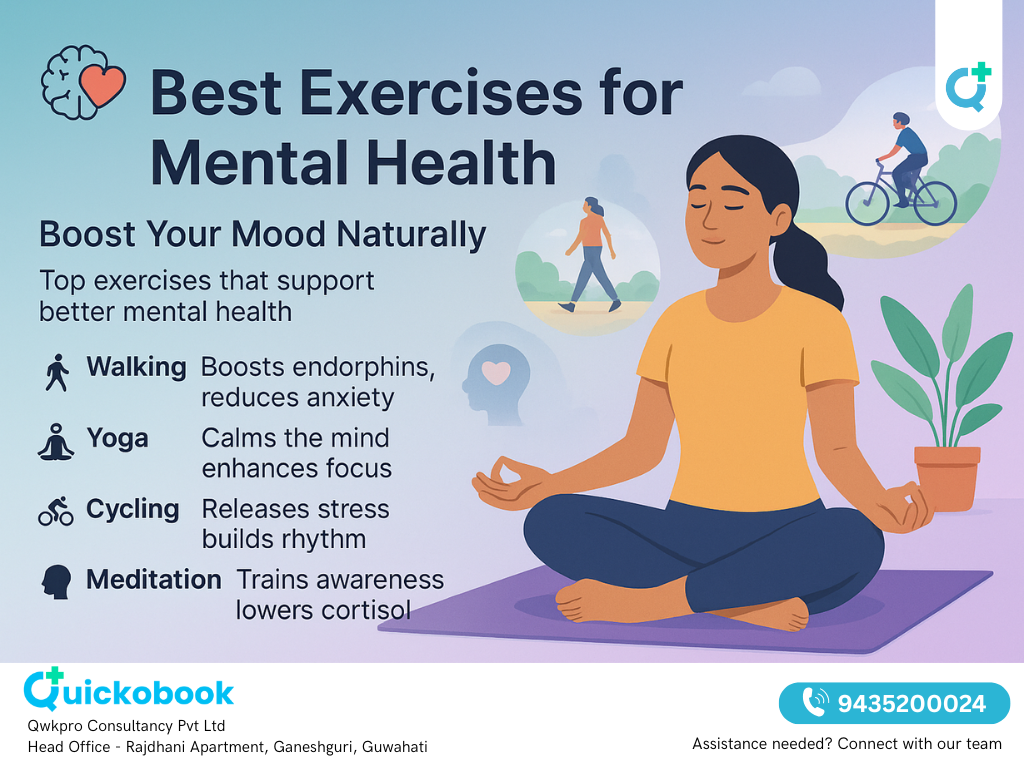
One of the most effective mental health exercises is mindfulness meditation. This practice encourages individuals to focus on the present moment instead of worrying about the past or future. Sitting quietly and paying attention to breathing allows the mind to slow down and relax.
During mindfulness practice, thoughts may still appear, but the goal is not to judge or fight them. Instead, individuals learn to observe thoughts calmly and return focus to breathing. Regular meditation helps reduce stress levels and improves emotional control, making it easier to stay calm in difficult situations.
The Power of Breathing Techniques:
Breathing exercises are simple yet powerful tools for managing anxiety. Slow and controlled breathing signals the nervous system to relax, lowering heart rate and reducing tension. Many people notice immediate calmness after practicing deep breathing for only a few minutes.
Taking slow breaths during stressful moments can prevent emotional reactions from becoming overwhelming. This technique is especially helpful before important meetings, exams, or sleep. Over time, conscious breathing becomes a natural response to stress.
Journaling for Emotional Clarity:
Writing thoughts in a journal is another effective mental health exercise. Journaling allows individuals to express emotions freely without fear of judgment. Putting feelings into words helps organize thoughts and makes problems feel more manageable.
Many people find that journaling reveals patterns in their emotions and behaviors. It can also highlight positive experiences that might otherwise be forgotten. Writing regularly encourages self-reflection and helps individuals understand themselves better.
Gratitude and Positive Thinking:
Practicing gratitude shifts attention away from negativity and toward appreciation. When individuals intentionally notice positive aspects of life, their mindset gradually becomes more optimistic. Gratitude exercises do not require major effort; simply reflecting on good moments each day can improve emotional well-being.
Positive thinking does not mean ignoring challenges. Instead, it involves approaching difficulties with hope and confidence. Over time, gratitude strengthens resilience and helps individuals recover more quickly from setbacks.
Physical Movement and Mental Health:
Although mental health exercises focus on the mind, physical movement plays an important role in emotional wellness. Activities such as walking, stretching, yoga, or light exercise release chemicals in the brain that improve mood and reduce stress.
Spending time outdoors while moving the body can be especially beneficial. Nature provides a calming environment that allows the mind to reset. Even short daily walks can improve energy levels and mental clarity.
Managing Digital Overload:
Modern technology offers convenience but can also overwhelm the mind. Constant notifications and social media comparisons may increase stress and reduce concentration. Taking intentional breaks from screens helps restore focus and emotional balance.
Creating small digital boundaries, such as avoiding phones before bedtime or setting specific offline hours, allows the brain to rest. Many people experience improved sleep and reduced anxiety after limiting screen time.
Building a Daily Mental Health Routine:
Consistency is the key to success with mental health exercises. Rather than practicing only during stressful periods, individuals benefit most when these activities become part of daily life. A simple routine might include a few minutes of breathing in the morning, mindful pauses during the day, and reflection or journaling in the evening.
The goal is not perfection but regular practice. Even short sessions can create meaningful long-term improvements in emotional health.
Benefits of Long-Term Practice:
People who consistently practice mental health exercises often experience stronger emotional stability and improved self-awareness. They become better at handling pressure, maintaining relationships, and adapting to change. Mental exercises also support creativity and focus, making everyday tasks feel more manageable.
Over time, these habits build resilience, allowing individuals to face challenges with confidence instead of fear. Emotional strength grows gradually, just like physical fitness.
Knowing When to Seek Additional Support:
While mental health exercises are highly beneficial, they are not a replacement for professional care. If someone experiences persistent sadness, severe anxiety, or difficulty functioning in daily life, seeking help from a mental health professional is important. Exercises work best as supportive tools alongside professional guidance when needed.
FAQ’s:
1. What are mental health exercises?
Mental health exercises are activities that help improve emotional well-being and reduce stress.They include practices like meditation, journaling, breathing techniques, and mindfulness.
2. How often should mental health exercises be practiced?
They can be practiced daily, even for just 5–10 minutes.Consistency is more important than spending long periods of time.
3. Can mental health exercises reduce anxiety?
Yes, regular practice helps calm the mind and improve emotional control.Techniques like deep breathing and mindfulness are especially helpful for anxiety.
4. Do mental health exercises replace therapy?
No, they support mental wellness but do not replace professional treatment.People with serious concerns should consult a mental health professional.
5. Who can benefit from mental health exercises?
Anyone can benefit, regardless of age or lifestyle.They are useful for students, workers, and anyone dealing with daily stress.
Conclusion:
Mental health exercises are simple practices that create powerful changes in emotional well-being. Through mindfulness, breathing techniques, journaling, gratitude, and healthy routines, individuals can strengthen their minds and develop lasting resilience. These exercises encourage awareness, balance, and self-care in a world that often feels overwhelming.