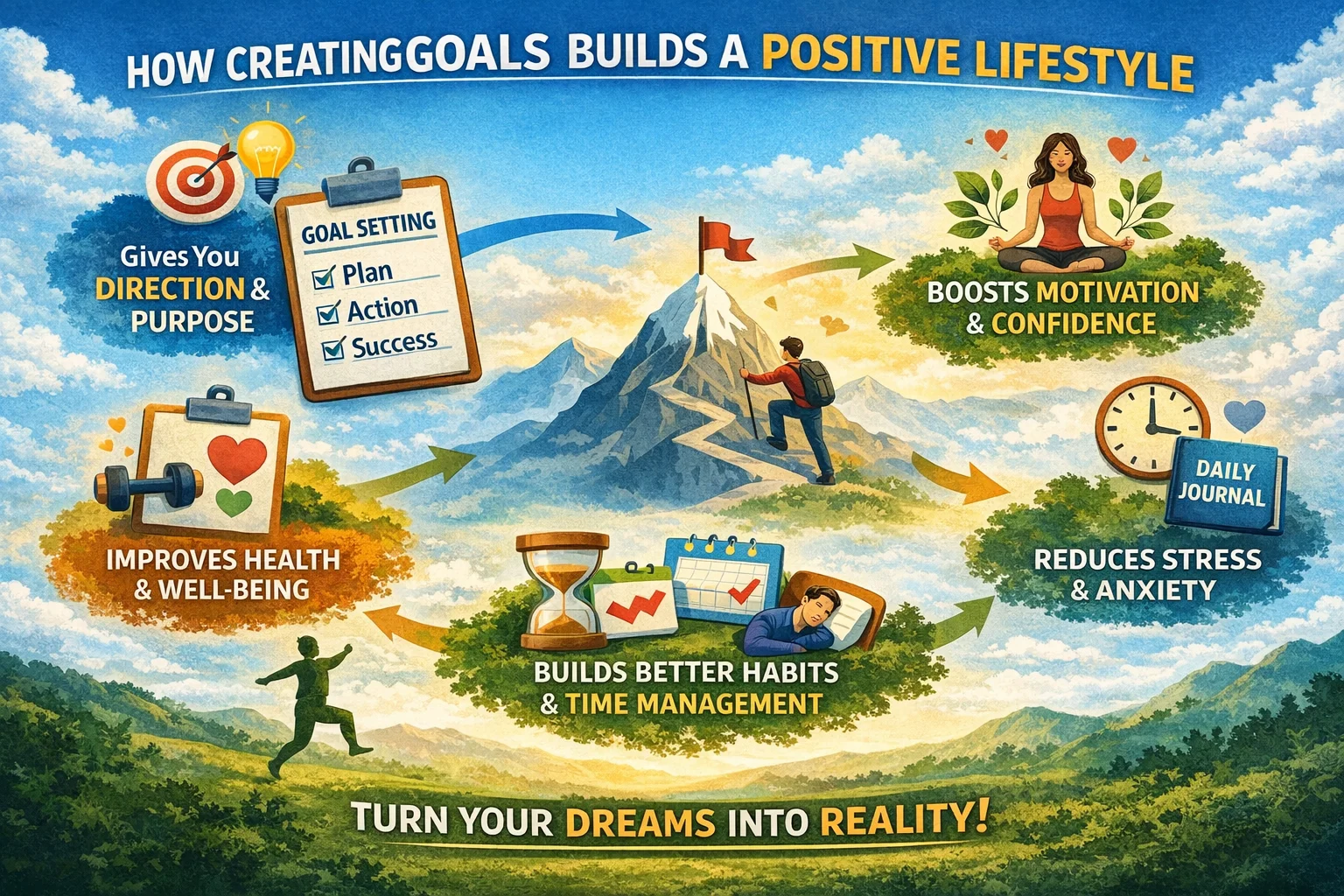
How Can Creating Goals Build or Maintain a Positive Lifestyle!
Creating goals is one of the most powerful ways to build and maintain a positive lifestyle. Goals give your life direction, purpose, and meaning. Without goals, it is easy to feel lost, unmotivated, or stuck in daily routines. When you set clear goals, you give yourself something to work toward. This creates motivation, confidence, and a sense of achievement.
In simple words, goals help you move forward instead of staying in the same place.
What Does It Mean to Create Goals?
Creating goals means deciding what you want to achieve in life and making a plan to reach it. Goals can be small or big. They can be personal, professional, financial, educational, or health-related.
For example:
- Losing weight
- Saving money
- Learning a new skill
- Improving relationships
- Starting a business
How Goals Give Direction?
One of the biggest benefits of creating goals is that they give direction to your life. When you know what you want, your decisions become clearer. You start using your time and energy wisely.
For example, if your goal is to live a healthy life, you may:
- Choose healthy food
- Exercise regularly
- Avoid harmful habits
If your goal is career growth, you may:
- Learn new skills
- Take courses
- Improve communication
Without goals, people often waste time or follow others without knowing their own path. Goals help you stay focused.
Goals Increase Motivation:
When you have a clear goal, you feel motivated to take action. Motivation is the energy that pushes you to work hard. Even when things become difficult, your goal reminds you why you started.
For example, if your goal is to save money to buy a house, you may avoid unnecessary spending. The goal gives you a reason to stay disciplined.
Achieving small goals also creates excitement and confidence. Every success encourages you to aim higher.
Goals Improve Self-Confidence:
When you set goals and achieve them, you prove to yourself that you are capable. This builds self-confidence. Confidence helps you face challenges with a positive attitude.
Even small achievements matter. For example:
- Completing a daily workout
- Finishing a book
- Waking up early
These small wins create a strong belief in yourself. Over time, this belief builds a positive lifestyle.
Goals Help You Develop Good Habits:
A positive lifestyle depends on good habits. Creating goals encourages you to build habits that support success.
For example:
- A fitness goal encourages daily exercise.
- A study goal encourages regular reading.
- A financial goal encourages saving money.
Habits shape your daily routine. When your daily routine becomes productive, your life naturally becomes more positive.
Goals Reduce Stress and Anxiety:
Many people feel stressed because they are unsure about their future. They worry about what will happen next. Setting goals reduces this uncertainty.
When you create a plan, you feel more in control of your life. Even if problems appear, you know your direction. This reduces fear and confusion.
Also, working toward goals keeps your mind busy in a healthy way. Instead of overthinking, you focus on progress.
Goals Improve Time Management:
When you have goals, you value your time more. You stop wasting hours on activities that do not help your growth.
For example:
- You may limit social media use.
- You may wake up earlier.
- You may plan your day better.
Time management is a key part of a positive lifestyle. It creates balance between work, family, health, and relaxation.
Goals Encourage Personal Growth:
A positive lifestyle is not only about happiness. It is also about growth. Goals push you out of your comfort zone. They challenge you to improve your skills and mindset.
For example:
- Public speaking goals improve communication.
- Fitness goals improve discipline.
- Business goals improve decision-making skills.
Each challenge teaches something new. Growth creates a sense of achievement and purpose.
Goals Strengthen Mental Health:
When people feel they are progressing in life, they feel happier and more satisfied. Goals give meaning to everyday actions.
Without goals, daily life may feel boring or repetitive. But when you are working toward something important, even small tasks feel meaningful.
Research shows that having clear goals can reduce feelings of depression and increase overall life satisfaction. It gives hope and a reason to wake up each morning.
How to Set Effective Goals?
To build a positive lifestyle, your goals should be clear and realistic.
Here are simple tips:
1. Be Specific
Instead of saying, “I want to be healthy,” say, “I will walk 30 minutes daily.”
2. Make Them Measurable
Track your progress. For example, “Save $200 every month.”
3. Set Realistic Goals
Do not set goals that are impossible. Start small and grow gradually.
4. Set a Time Limit
Give yourself a deadline. For example, “Complete this course in three months.”
5. Write Them Down
Writing goals makes them more powerful and serious.
The Role of Short-Term and Long-Term Goals:
Both types are important.
Short-term goals keep you motivated daily.
Long-term goals give you a bigger vision for the future.
For example:
- Short-term: Exercise 3 times this week.
- Long-term: Lose 10 kg in one year.
Small goals support bigger goals. Step-by-step progress builds a strong and positive lifestyle.
Maintaining a Positive Lifestyle Through Goals:
Creating goals is not enough. You must review and adjust them regularly.
Life changes, and your goals may change too. That is normal. The important thing is to keep moving forward.
Celebrate your progress. Even small improvements matter. Reward yourself when you achieve something important.
Also, learn from failures. Sometimes goals take longer than expected. Instead of quitting, adjust your plan and try again.
Common Mistakes to Avoid:
- Setting too many goals at once
- Comparing your goals with others
- Giving up after one failure
- Choosing goals that do not match your values
Your goals should reflect your own dreams, not someone else’s expectations.
FAQ’s:
1. How do goals help build a positive lifestyle?
Goals give direction and purpose to your life. They motivate you to take positive actions and improve daily habits.
2. Can small goals really make a difference?
Yes, small goals create small wins that build confidence and momentum. Over time, these small achievements lead to big changes.
3. How often should I review my goals?
You should review your goals regularly, such as weekly or monthly. This helps you stay on track and adjust if needed.
4. What if I fail to achieve a goal?
Failure is part of growth. Learn from your mistakes, adjust your plan, and try again with a better strategy.
5. Are written goals more effective than thinking about them?
Yes, writing goals makes them clearer and more serious. It also helps you track progress and stay committed.
Final Thoughts:
Creating goals plays a powerful role in building and maintaining a positive lifestyle. Goals give direction, motivation, confidence, and purpose. They help you develop good habits, manage time better, and reduce stress.
A positive lifestyle does not happen by accident. It is built step by step through clear intentions and consistent effort. When you create meaningful goals and work toward them daily, you take control of your life.